

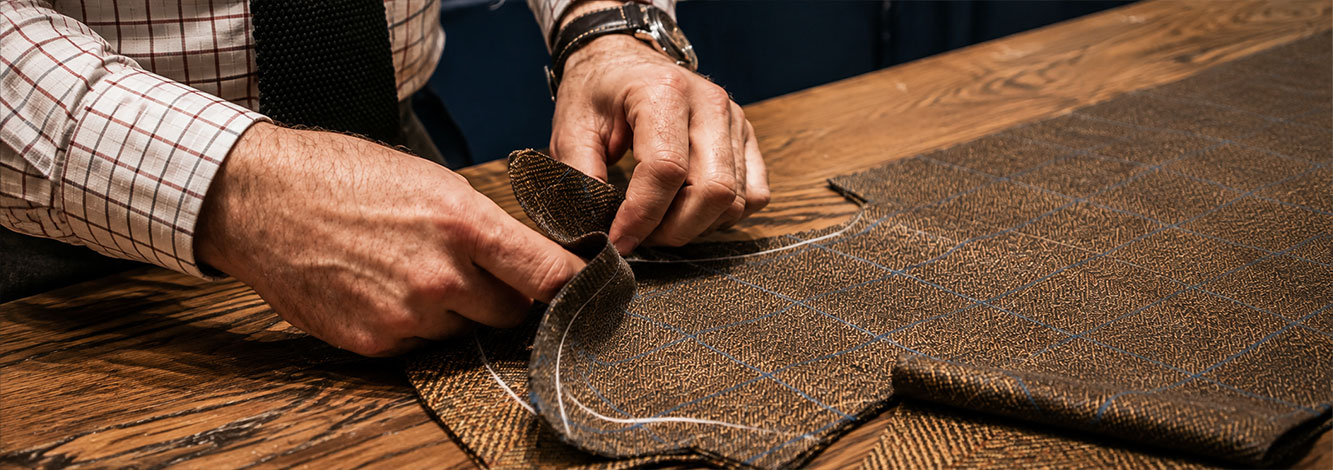
The Return of Craftsmanship
Why Specialised Skills Are Becoming Luxury’s Most Valuable Resource
As luxury searches for new ways to demonstrate value, craftsmanship is moving back to the centre of the conversation. But the skills behind exceptional products are becoming increasingly difficult to find.
Luxury has always celebrated craftsmanship.
Yet for much of the past two decades, the industry’s attention was often directed elsewhere: global expansion, retail growth, marketing, digital commerce and increasingly ambitious production volumes.
In 2026, something appears to be shifting.
At the latest Paris couture season, craftsmanship was once again one of the defining themes. Demand for couture remains remarkably strong, with full order books and, in some cases, waiting lists stretching several months.
The problem is no longer finding clients.
It is finding enough qualified artisans to make the products.
When Skill Becomes Scarce
Luxury manufacturing depends on knowledge that cannot always be documented in a technical specification.
The behaviour of a particular leather. The tension required for a seam. The construction needed to achieve an unusual silhouette. The sequence of operations that transforms an experimental prototype into something that can actually be produced.
Much of this knowledge is learned through experience.
And that makes it difficult to replace.
Across the industry, specialised roles such as patternmakers, prototypists and tailors have already become increasingly difficult to recruit, prompting luxury groups and manufacturers to invest in training programmes designed to preserve industrial know-how.
Craftsmanship Is Also Infrastructure
There is a tendency to think of craftsmanship primarily as something visible: embroidery, hand-finishing, intricate construction or an exceptional material.
But craftsmanship also exists behind the finished product.
It resides in the technician who understands whether a designer’s idea can be industrialised. In the patternmaker who resolves a difficult construction. In the manufacturer who knows how a material will behave once production moves beyond the prototype.
These capabilities form part of the infrastructure of luxury.
Without them, creative ambition eventually encounters industrial reality.
The Importance of Production Ecosystems
This is why established manufacturing regions remain so important.
Places such as Italy, Portugal, France and Spain are valuable not simply because factories happen to be located there. Their advantage comes from ecosystems built over decades, sometimes generations, connecting manufacturers, material suppliers, technicians and specialised craftspeople.
A recent examination of the leather industry in Ubrique, Spain, illustrates this clearly. The region’s reputation is supported by generations of accumulated knowledge, while dedicated training initiatives are now helping transfer those skills to younger craftspeople.
Once such knowledge disappears, rebuilding it is extraordinarily difficult.
From Heritage to Competitive Advantage
For luxury houses, preserving craftsmanship therefore should not be viewed purely as preserving tradition.
It is also about maintaining capability.
As products become more technically ambitious and consumers become more selective about what justifies a luxury price, access to exceptional manufacturing knowledge can become a genuine competitive advantage.
The brands best positioned for this environment may not simply be those with the strongest creative vision.
They will be those capable of connecting that vision with the people who know how to make it real.
Craftsmanship is not returning because luxury is looking backward.
It is returning because the future of exceptional products still depends on exceptional hands.
The Return of Craftsmanship
Why Specialised Skills Are Becoming Luxury’s Most Valuable Resource
As luxury searches for new ways to demonstrate value, craftsmanship is moving back to the centre of the conversation. But the skills behind exceptional products are becoming increasingly difficult to find.
Luxury has always celebrated craftsmanship.
Yet for much of the past two decades, the industry’s attention was often directed elsewhere: global expansion, retail growth, marketing, digital commerce and increasingly ambitious production volumes.
In 2026, something appears to be shifting.
At the latest Paris couture season, craftsmanship was once again one of the defining themes. Demand for couture remains remarkably strong, with full order books and, in some cases, waiting lists stretching several months.
The problem is no longer finding clients.
It is finding enough qualified artisans to make the products.
When Skill Becomes Scarce
Luxury manufacturing depends on knowledge that cannot always be documented in a technical specification.
The behaviour of a particular leather. The tension required for a seam. The construction needed to achieve an unusual silhouette. The sequence of operations that transforms an experimental prototype into something that can actually be produced.
Much of this knowledge is learned through experience.
And that makes it difficult to replace.
Across the industry, specialised roles such as patternmakers, prototypists and tailors have already become increasingly difficult to recruit, prompting luxury groups and manufacturers to invest in training programmes designed to preserve industrial know-how.
Craftsmanship Is Also Infrastructure
There is a tendency to think of craftsmanship primarily as something visible: embroidery, hand-finishing, intricate construction or an exceptional material.
But craftsmanship also exists behind the finished product.
It resides in the technician who understands whether a designer’s idea can be industrialised. In the patternmaker who resolves a difficult construction. In the manufacturer who knows how a material will behave once production moves beyond the prototype.
These capabilities form part of the infrastructure of luxury.
Without them, creative ambition eventually encounters industrial reality.
The Importance of Production Ecosystems
This is why established manufacturing regions remain so important.
Places such as Italy, Portugal, France and Spain are valuable not simply because factories happen to be located there. Their advantage comes from ecosystems built over decades, sometimes generations, connecting manufacturers, material suppliers, technicians and specialised craftspeople.
A recent examination of the leather industry in Ubrique, Spain, illustrates this clearly. The region’s reputation is supported by generations of accumulated knowledge, while dedicated training initiatives are now helping transfer those skills to younger craftspeople.
Once such knowledge disappears, rebuilding it is extraordinarily difficult.
From Heritage to Competitive Advantage
For luxury houses, preserving craftsmanship therefore should not be viewed purely as preserving tradition.
It is also about maintaining capability.
As products become more technically ambitious and consumers become more selective about what justifies a luxury price, access to exceptional manufacturing knowledge can become a genuine competitive advantage.
The brands best positioned for this environment may not simply be those with the strongest creative vision.
They will be those capable of connecting that vision with the people who know how to make it real.
Craftsmanship is not returning because luxury is looking backward.
It is returning because the future of exceptional products still depends on exceptional hands.
The Return of Craftsmanship
Why Specialised Skills Are Becoming Luxury’s Most Valuable Resource
As luxury searches for new ways to demonstrate value, craftsmanship is moving back to the centre of the conversation. But the skills behind exceptional products are becoming increasingly difficult to find.
Luxury has always celebrated craftsmanship.
Yet for much of the past two decades, the industry’s attention was often directed elsewhere: global expansion, retail growth, marketing, digital commerce and increasingly ambitious production volumes.
In 2026, something appears to be shifting.
At the latest Paris couture season, craftsmanship was once again one of the defining themes. Demand for couture remains remarkably strong, with full order books and, in some cases, waiting lists stretching several months.
The problem is no longer finding clients.
It is finding enough qualified artisans to make the products.
When Skill Becomes Scarce
Luxury manufacturing depends on knowledge that cannot always be documented in a technical specification.
The behaviour of a particular leather. The tension required for a seam. The construction needed to achieve an unusual silhouette. The sequence of operations that transforms an experimental prototype into something that can actually be produced.
Much of this knowledge is learned through experience.
And that makes it difficult to replace.
Across the industry, specialised roles such as patternmakers, prototypists and tailors have already become increasingly difficult to recruit, prompting luxury groups and manufacturers to invest in training programmes designed to preserve industrial know-how.
Craftsmanship Is Also Infrastructure
There is a tendency to think of craftsmanship primarily as something visible: embroidery, hand-finishing, intricate construction or an exceptional material.
But craftsmanship also exists behind the finished product.
It resides in the technician who understands whether a designer’s idea can be industrialised. In the patternmaker who resolves a difficult construction. In the manufacturer who knows how a material will behave once production moves beyond the prototype.
These capabilities form part of the infrastructure of luxury.
Without them, creative ambition eventually encounters industrial reality.
The Importance of Production Ecosystems
This is why established manufacturing regions remain so important.
Places such as Italy, Portugal, France and Spain are valuable not simply because factories happen to be located there. Their advantage comes from ecosystems built over decades, sometimes generations, connecting manufacturers, material suppliers, technicians and specialised craftspeople.
A recent examination of the leather industry in Ubrique, Spain, illustrates this clearly. The region’s reputation is supported by generations of accumulated knowledge, while dedicated training initiatives are now helping transfer those skills to younger craftspeople.
Once such knowledge disappears, rebuilding it is extraordinarily difficult.
From Heritage to Competitive Advantage
For luxury houses, preserving craftsmanship therefore should not be viewed purely as preserving tradition.
It is also about maintaining capability.
As products become more technically ambitious and consumers become more selective about what justifies a luxury price, access to exceptional manufacturing knowledge can become a genuine competitive advantage.
The brands best positioned for this environment may not simply be those with the strongest creative vision.
They will be those capable of connecting that vision with the people who know how to make it real.
Craftsmanship is not returning because luxury is looking backward.
It is returning because the future of exceptional products still depends on exceptional hands.